

Smart Gear for Smart Kids: A Gifted Child Test Prep Review
May 05, 2026
Why Gifted Child Test Prep Matters More Than You Think
Gifted child test prep is one of the most searched topics among parents of high-potential kids — and for good reason. The tests that determine gifted program placement are unlike anything taught in a regular classroom. They measure how your child thinks, not just what they know.
Here is a quick look at the most important things to know before you dive in:
| Question | Quick Answer |
|---|---|
| Most common gifted tests | CogAT, OLSAT, NNAT, SCAT |
| Skills tested | Verbal, quantitative, and nonverbal reasoning |
| When to start prep | 2-3 months before the test date |
| Best prep approach | Short, consistent sessions + realistic practice tests |
| What scores matter | 95th percentile or above for most gifted programs |
These tests are competitive. A child who is clearly bright in the classroom can still underperform on an unfamiliar test format — not because they lack ability, but because the format is new to them. Research from test publishers supports this: young children often struggle with standardized tests simply because they do not understand what they are being asked to do.
That is exactly why preparation matters — even for genuinely gifted kids.
The good news? With the right resources, the right timeline, and a low-pressure approach, you can give your child a real advantage without turning prep into a stressful chore.
I'm Bige Doruk, founder of Bright Kids, where for nearly two decades I've guided over 10,000 students through every stage of gifted child test prep — from early childhood assessments to competitive school admissions. In this guide, I'll walk you through the best tools, strategies, and resources available in 2026 so you can make a confident, informed choice for your child.
The Ultimate Guide to Gifted Child Test Prep in 2026
When we talk about gifted child test prep, we are looking at a landscape of specialized assessments designed to identify high cognitive potential. Unlike standard achievement tests that check if a student has memorized their multiplication tables, gifted tests look at reasoning.
The "Big Four" you will likely encounter are:
- CogAT (Cognitive Abilities Test): This measures verbal, quantitative, and nonverbal reasoning. It is widely used across the U.S. to identify students for accelerated programs.
- OLSAT (Otis-Lennon School Ability Test): Often used in tandem with achievement tests, the OLSAT measures abstract thinking and reasoning.
- NNAT (Naglieri Nonverbal Ability Test): This is a "culturally neutral" test that uses shapes and patterns, making it ideal for children who may have language barriers but high intellectual potential.
- SCAT (School and College Ability Test): Frequently used by programs like Johns Hopkins CTY, this tests verbal and quantitative abilities above a child's current grade level.
At Bright Kids, we emphasize that Gifted & Talented Test Preparation in NYC | Bright Kids requires a nuanced understanding of these formats. These aren't just tests; they are puzzles. If your child has never seen a matrix or a number series before, they might freeze up, regardless of how "smart" they are.
The Difference Between IQ and Achievement
It is important to distinguish between IQ tests (like the WISC-V or Stanford-Binet) and achievement tests (like the ITBS or MAP). IQ tests measure innate potential, while achievement tests measure what has been learned in school. Many gifted programs use a combination of both. You can see how this works in practice by looking at a Gifted and Talented Practice Test to see the logic puzzles involved.
For a deeper dive into the science behind these evaluations, we recommend checking out the Scientific research on testing and assessment provided by the Connecticut Association for the Gifted.
Identifying the Right Gifted Child Test Prep for Your District
Geography plays a massive role in which gifted child test prep you need. In May 2026, we see districts using more varied approaches than ever before.
- New York City: The NYC G&T landscape has evolved. While standardized tests like the OLSAT were the gold standard for years, the city now incorporates classroom performance and teacher evaluations. However, entry into top-tier private schools still heavily relies on assessments like the WPPSI-IV or the Stanford-Binet.
- Texas (Dallas & Houston): Programs like the HISD Vanguard or Dallas ISD G&T programs often utilize the CogAT and NNAT. Teachers in Texas often take specific certifications (like the TExES 162) just to understand how to identify these students.
- Florida: In areas like Orlando and Miami, schools frequently use the CogAT. Parents often seek a Gifted/IQ Testing Orlando-Barna Psychology or consult the Gifted Testing Directory - Miami Gifted Children, Inc. to find licensed psychologists for private testing.
- Connecticut: Many districts here utilize the OLSAT or CogAT, and we often help families transition into advanced middle school prep, such as SHSAT Connecticut Prep.
Understanding Test Formats and Skills Measured
What exactly is your child doing during these tests? They are exercising their "thinking muscles."
Pattern Recognition and Analogies The NNAT is the king of pattern recognition. Your child might see a grid of shapes with one missing and have to figure out the logic to fill it in. This is why practicing NNAT Reasoning by Analogy is so effective; it teaches the child to look for rotations, color changes, and size shifts.
Quantitative Reasoning This isn't just 2+2. It involves finding relationships between numbers. For example, COGAT Number Series Exercises might ask a child to identify the next number in a sequence like 2, 4, 8, 16... or something much more complex where the increment changes.
Verbal Reasoning Tests like the OLSAT ask kids to categorize words or follow complex directions. If a test says "Point to the circle that is not next to the square but is above the triangle," a child needs strong listening and processing skills to succeed.
Essential Gear: Top Resources for Success
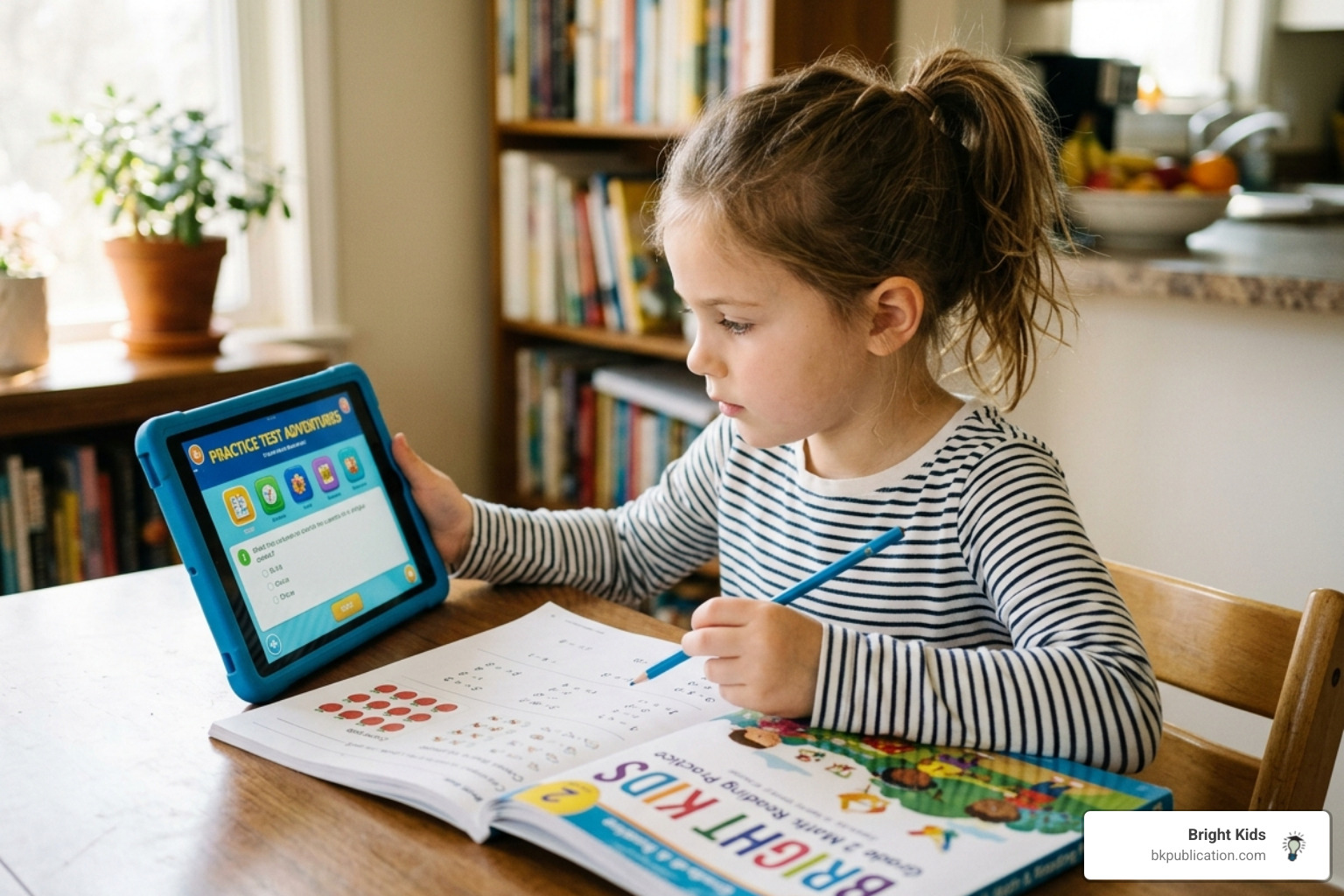
When selecting gifted child test prep materials, you have two main choices: physical books and digital simulations. In our 17 years of experience, we’ve found that a "blended" approach works best.
Comparing Prep Mediums
| Feature | Physical Books | Digital Simulations |
|---|---|---|
| Brain Engagement | High (hand-eye coordination) | Moderate (focus on screen) |
| Realism | Best for paper-based tests | Best for computer-based tests (CogAT) |
| Feedback | Manual (parent-graded) | Instant (automated) |
| Skill Built | Spatial/Fine Motor | Tech Literacy/Speed |
Using OLSAT Test Sample Questions is a great way to start. We also recommend ERB Diagnostic Practice Tests to get a baseline of where your child currently stands before you begin a heavy study regimen.
Maximizing Results with Gifted Child Test Prep Books
There is something irreplaceable about a physical book. For younger children (Pre-K to 2nd Grade), the tactile experience of pointing to a page or circling an answer helps cement the logic in their minds.
Spatial Skills and Figure Matrices Many children struggle with 3D visualization. Exercises like WPPSI Spatial Skills Practice help them understand how objects look when rotated. This is a core component of the CogAT, where COGAT Figure Matrices Exercises require students to find the relationship between two figures and apply it to a third.
The Gold Standard Books If your child is taking a traditional IQ test for private school admission, a Stanford-Binet Practice Book is an essential part of your "smart gear" kit. These books mimic the exact style of the exam, ensuring there are no surprises on test day.
Digital Tools and Interactive Learning
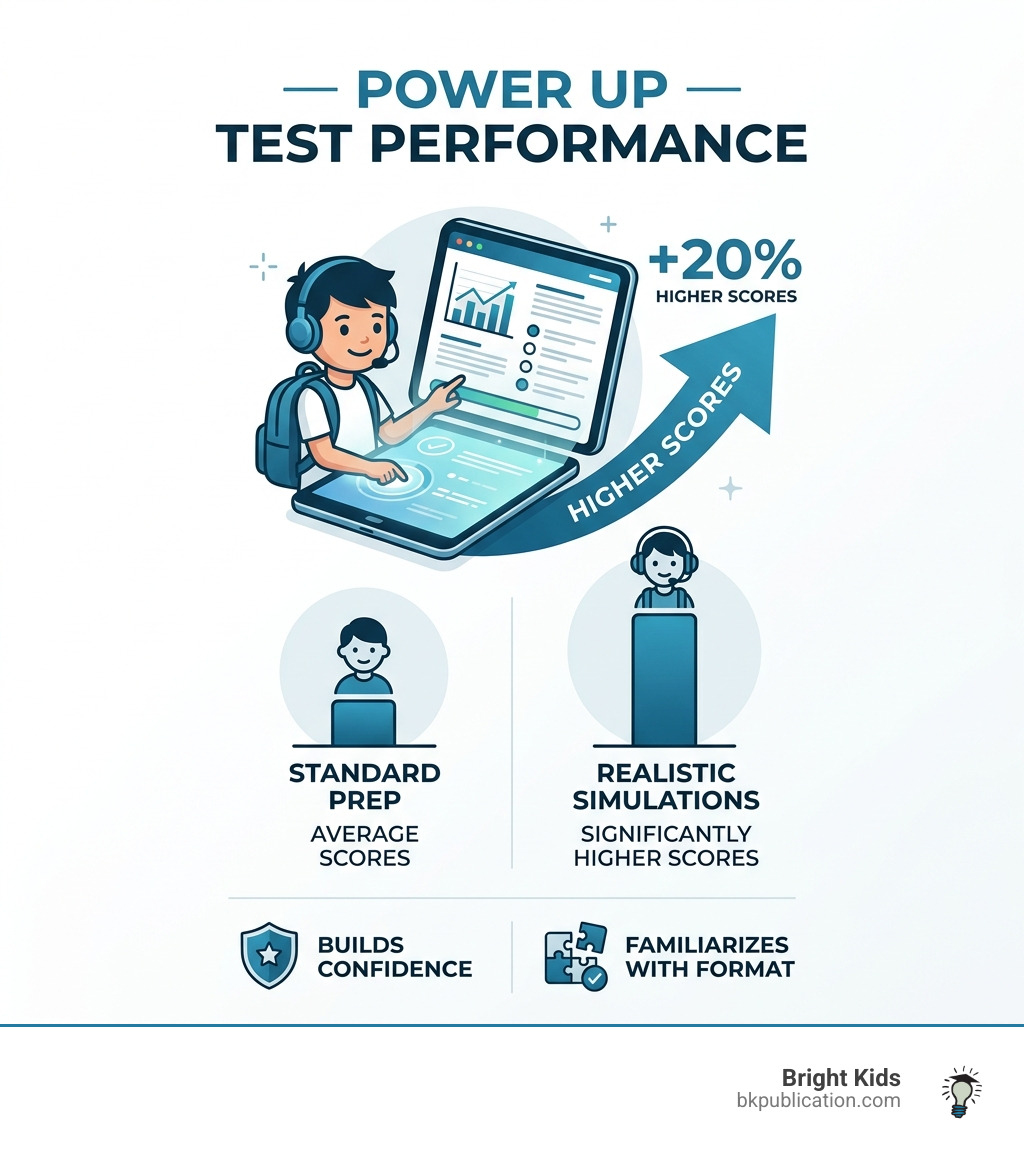
As we move further into 2026, more tests are moving online. The CogAT, for instance, is frequently administered on a computer. If your child only practices with paper and pencil, they might be confused by the interface on test day.
Interactive tools like CTP Online Testing platforms allow children to get used to clicking, dragging, and navigating digital menus. For those looking for a broader assessment, the ITBS is another common metric; you can find an ITBS Online Practice Test or even Practice ITBS Test Free Online to gauge their achievement levels in reading and math.
Strategic Preparation: When and How to Start
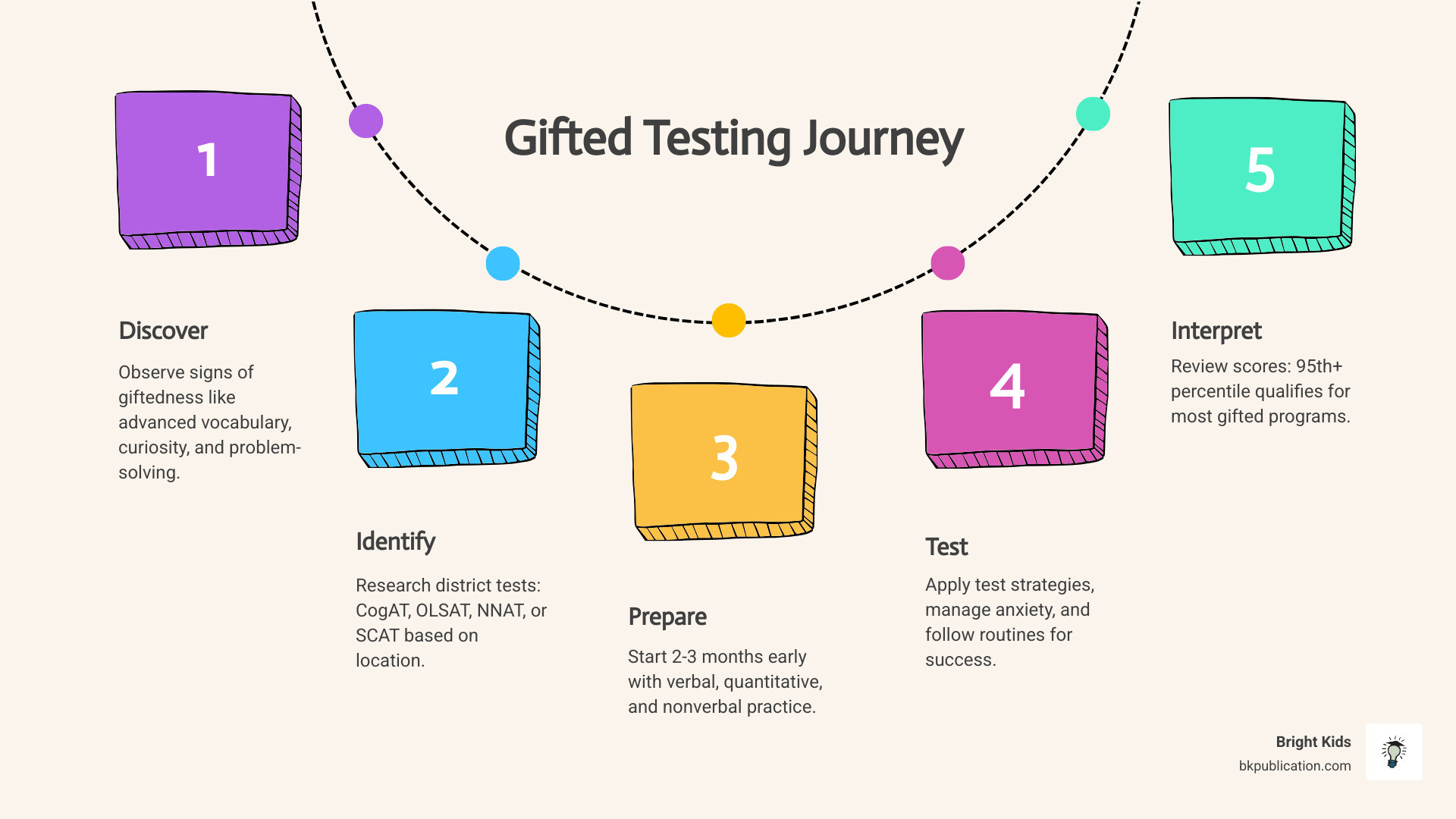
The most common mistake parents make is waiting until the last minute. We recommend starting gifted child test prep at least 2 to 3 months before the test date.

The 3-Step Strategy for Success
- Eliminate the Surprise: Familiarize your child with the question types. If they know what a "matrix" is, they won't spend ten minutes of the test trying to figure out the instructions.
- Boost the Specific Skills: Identify if they are weaker in verbal or quantitative areas and focus your energy there.
- Ease the Anxiety: Make it fun! Call it "Brain Games" or "Puzzle Time." If you call it "The Big Test That Determines Your Future," your child will likely freeze.
For those aiming for high-stakes admissions, the Winning Million Dollar Kindergarten Spot Essential Steps guide offers a roadmap for navigating the competitive entry points in major cities like NYC and Chicago.
Avoiding Common Prep Mistakes
- Cramming: A four-hour study session on Sunday is useless for a six-year-old. Aim for 15–20 minutes, 3 or 4 times a week.
- Over-correcting: If they get a question wrong, don't just give the answer. Ask, "How did you get that?" to understand their logic.
- Ignoring Test Day Logistics: A child who is hungry or tired will not score in the 99th percentile.
If you are preparing for a specific IQ assessment, reviewing Stanford-Binet Intelligence Prep strategies can help you tailor your home environment to support cognitive growth.
Personalized Tutoring and Expert Guidance
Sometimes, a book isn't enough. Many families in NYC, Chicago, and Los Angeles find that professional tutoring provides the "edge" needed for top-tier programs.
- In NYC: Our Best CTP Tutors NYC focus on the Comprehensive Testing Program, which is a staple for local private schools.
- Upper Level Prep: For older students, ERB Upper Level Tutoring helps with the transition into competitive middle and high schools.
- In Chicago: We offer specialized Chicago Admissions Test Tutoring for the Selective Enrollment programs.
Tutoring isn't about "teaching to the test"; it's about teaching the child how to approach problems they've never seen before. It builds confidence that carries over into their regular schoolwork.
Frequently Asked Questions about Gifted Testing
What are the signs that my child is gifted and ready for testing?
Giftedness isn't just about being "good at school." Often, gifted children show:
- An advanced vocabulary for their age.
- An intense curiosity about how things work (the "why" phase never ends).
- The ability to solve complex problems in their head.
- Asynchronous development (they might be a math genius but struggle with tying their shoes).
If you’re unsure, a professional evaluation via IQ Testing — Mind Matters can provide a formal assessment of their cognitive profile.
How are gifted test scores interpreted for program placement?
Most programs look for a Percentile Rank. If your child is in the 98th percentile, it means they scored higher than 98% of children their age.
Another common metric is the Standard Age Score (SAS), which usually has a mean of 100. A score of 130 or higher is typically considered the threshold for "gifted." For those looking at secondary school admissions, understanding the Gifted Admissions SSAT Guide is crucial, as it explains how these scores translate to competitive placements.
What should parents do on test day to ensure success?
- The Breakfast Rule: Protein is better than sugar. Avoid the "sugar crash" halfway through the verbal battery.
- Arrival Time: Arrive 15 minutes early. Rushing creates cortisol, which shuts down the creative reasoning parts of the brain.
- The "Effort" Talk: Tell your child you are proud of their work, not just the result. This reduces performance anxiety.
Conclusion: Your Partner in the Gifted Journey
Preparing for a gifted program can feel like a daunting task, but you don't have to do it alone. At Bright Kids, we have spent 17 years perfecting the art of gifted child test prep. We’ve seen thousands of children walk into testing centers with their heads held high because they knew exactly what to expect.
Whether you are looking for the perfect practice book, a comprehensive online simulation, or one-on-one tutoring in NYC, Chicago, or Houston, we have the "smart gear" your child needs. Our philosophy is simple: when you remove the fear of the unknown, a child's true potential can finally shine.
Ready to take the next step? Explore our private school interview preparation guide to ensure your child is ready for every aspect of the admissions process. Let’s unlock that potential together.