

Math Reasoning and Other Schoolyard Hurdles: A CTP-5 Guide
Apr 17, 2026
What Is CTP-5 Testing and Why Does It Matter?
CTP-5 testing is a standardized, proctored assessment that measures academic achievement and reasoning skills for students in Grades 1-11, delivered digitally through a secure browser and supervised via Zoom.
Here is a quick overview of what you need to know:
| Feature | Details |
|---|---|
| Full Name | Comprehensive Testing Program (CTP-5) |
| Developer | Educational Records Bureau (ERB) |
| Grades Covered | 1-11 |
| Subjects Tested | Reading, Writing, Vocabulary, Mathematics, Science, Verbal & Quantitative Reasoning |
| Testing Duration | Up to 5 hours across 2 test days |
| Proctoring Method | Live via Zoom, camera required |
| Results Timeline | Within 72 hours |
| Who Can Take It | Students at independent schools and homeschoolers |
Every year, hundreds of thousands of students take the CTP-5. It is one of the most trusted benchmarks used by independent schools across the country — and increasingly, by homeschool families who want a clear, nationally normed picture of where their child stands academically.
For parents navigating private school admissions or gifted program pathways, understanding how this test works — and how to prepare for it — can make a real difference.
I'm Bige Doruk, founder of Bright Kids, and over nearly two decades I've helped more than 10,000 students prepare for high-stakes assessments including CTP-5 testing through structured, skill-based programs. In the sections below, I'll walk you through everything — from how the test is structured to what the scores actually mean and how to prepare your child without the stress.
What is the ERB CTP-5?
The Comprehensive Testing Program (CTP-5) is a rigorous summative assessment developed by the Educational Records Bureau (ERB). For nearly 90 years, the ERB has been a cornerstone of the independent school community, providing high-quality data to educators and families. While many parents simply call it "the ERB test," the CTP-5 is specifically designed for students in Grades 1 through 11.
The primary goal of the CTP-5 is to measure both what a student has learned (achievement) and their ability to process information and solve problems (reasoning). Because it is used by over 2,000 member schools and districts worldwide, it offers incredibly strong norm pools. This means when your child takes the CTP, their scores are compared against hundreds of thousands of other students at both a national level and within the specific context of high-achieving independent schools.
If you are looking to understand how a student is growing year over year, the CTP provides a consistent yardstick. It was nationally normed in 2018 and is independently normed on a revolving three-year average to ensure the data remains relevant and accurate. Ready to learn more?
Benefits for Students and Educators
The CTP-5 isn't just about a final score; it’s about providing actionable insights. For educators, the data helps fine-tune instructional guidance. If a whole class struggles with a specific geometry concept, the teacher knows exactly where to pivot.
For students and parents, the CTP-5 helps identify "schoolyard hurdles"—those specific areas where a bright student might be tripping up. By comparing reasoning scores with achievement scores, we can see if a student is performing to their full potential or if there is a gap that needs addressing. This academic benchmarking is essential for identifying giftedness or uncovering hidden learning needs.
Achievement vs. Reasoning: Understanding the Subtests
One of the most unique aspects of the CTP-5 is the distinction between achievement and reasoning. Most standardized tests focus on what a child knows (achievement). The CTP goes a step further by testing how a child thinks (reasoning).
| Subtest Type | Purpose | Key Subjects Included |
|---|---|---|
| Achievement | Measures knowledge of specific curriculum content. | Reading Comprehension, Mathematics, Writing Mechanics, Science, Vocabulary, Spelling. |
| Reasoning | Measures the ability to find patterns and solve novel problems. | Verbal Reasoning, Quantitative Reasoning. |
Starting in Grade 3, the CTP-5 introduces these reasoning subtests. Verbal Reasoning looks at a student's ability to understand relationships between words and concepts, while Quantitative Reasoning focuses on mathematical patterns and logic. CTP-5 by ERB | Summative Assessment for Grades 1-11
Adaptive Testing and Depth of Knowledge
The CTP-5 online testing experience is "adaptive." This means the platform is smart; as a student moves through the first half of a subtest, the difficulty of the questions in the second half adjusts based on their performance. If a student is getting every question right, the test will present more challenging items to find their true ceiling.
Furthermore, the CTP-5 uses "Depth of Knowledge" (DOK) questions. These aren't just simple multiple-choice questions. They are classified into three cognitive levels:
- Recall: Basic facts and definitions.
- Decision-making: Applying skills to solve a problem.
- Analysis: Strategic thinking and complex reasoning.
This multi-dimensional approach ensures that the test measures more than just memory—it measures true intellectual capability.
Navigating CTP-5 Online Testing: Technical Setup and Process
Transitioning to CTP-5 online testing has made the assessment more accessible, but it does require some technical preparation. Unlike a standard website, the CTP-5 is administered through a specialized platform to ensure security and fairness.
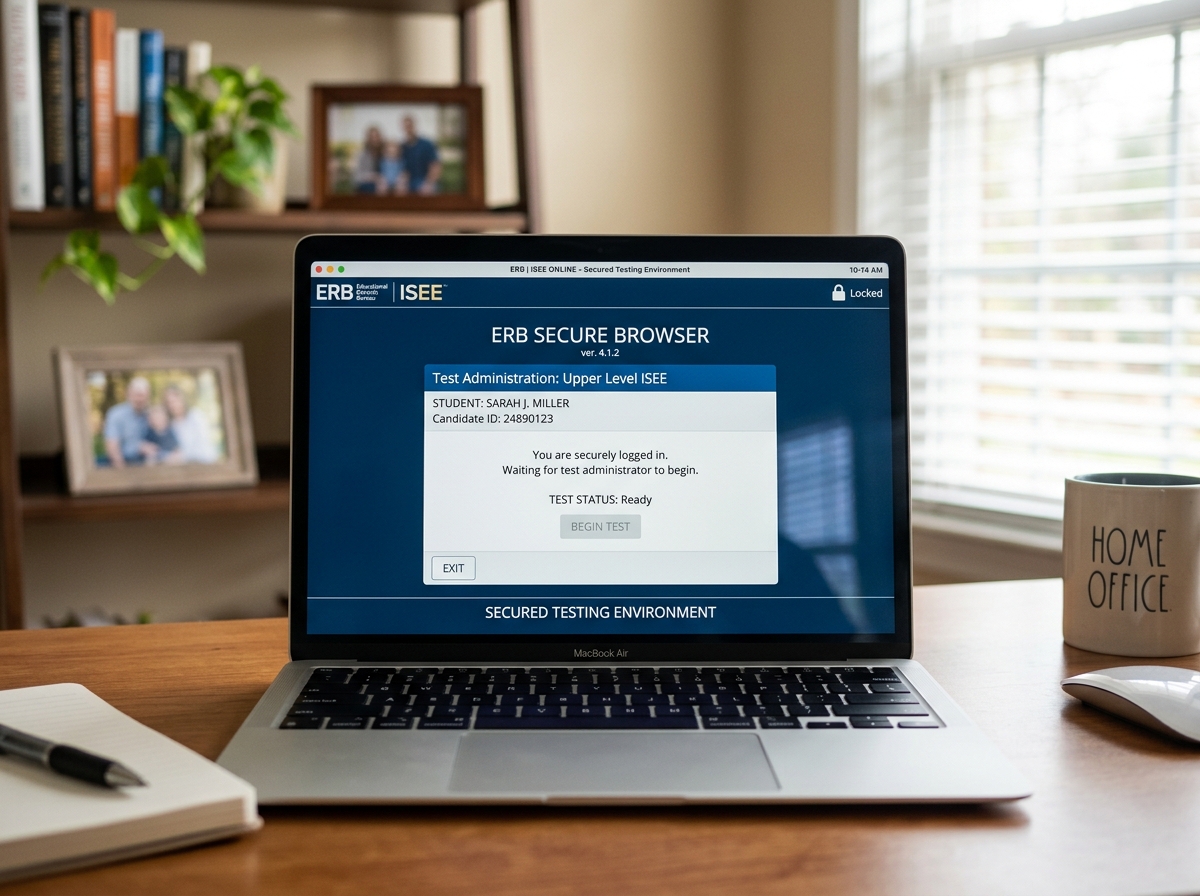
To get started, parents or schools must ensure the hardware meets specific requirements. This includes running a systems check to verify internet speed and browser compatibility. The most critical component is the Download the ERB Secure Browser. This "locks down" the computer so the student cannot access other websites or files during the exam.
Who is Eligible for CTP-5 Online Testing?
While the CTP-5 is the primary assessment for many independent schools, it is also available for homeschoolers. This is a fantastic option for families who need to meet state testing requirements or who want to ensure their child is on track for private high school admissions.
Remote proctoring has changed the game. Students can now take the test from the comfort of home while being supervised by a trained proctor via Zoom. Before the actual test day, students usually participate in a mandatory orientation. This session helps them get comfortable with the tools—like the digital highlighter or the eliminator tool—to reduce test-day anxiety.
The Testing Day Schedule
Testing is typically spread over two days to prevent "brain fry." Each day involves several hours of focused work, with the total testing time reaching up to 5 hours.
- Proctoring: A live proctor monitors the session via Zoom. The student’s camera must remain on at all times.
- Student Logs: Parents are often required to print a "Student Log" which contains the session numbers needed to enter each part of the test.
- Environment: A quiet, well-lit space is required. An adult must be nearby (in the house) to help with any technical glitches, but they cannot assist with the test questions.
Scoring and Results: What the Numbers Mean
Once the CTP-5 online testing is complete, the wait for results is surprisingly short—often within 72 hours. However, the reports can be a bit overwhelming if you aren't familiar with the terminology.
- Raw Score: The number of questions answered correctly.
- Scale Score: A standardized score that allows for year-over-year comparison, regardless of the test level taken.
- Percentile Rank: This tells you how your child performed compared to the "norm group." If your child is in the 85th percentile, they scored higher than 85% of students in that group.
- Stanine Score: A simplified 1–9 scale. Stanines 7, 8, and 9 are considered above average.
One of the most helpful features of the modern CTP-5 report is the inclusion of Lexile and Quantile Scores. These scores link your child’s results to specific reading lists and math resources tailored exactly to their current ability level.
Results Delivery and Interpretation
Results are delivered via the ERB 360 Access portal. These individual student reports are confidential and provide a deep dive into strengths and weaknesses. For example, a report might show that while a student is excellent at "Reading Comprehension," they struggle with "Writing Mechanics" (like punctuation and capitalization).
At Bright Kids, we often suggest families look for "discrepancies." If a student has a very high Verbal Reasoning score but a much lower Reading Comprehension score, it might suggest that they have the innate ability but haven't yet mastered the specific academic skills needed to show it on paper.
Preparing for Success: Resources and Accommodations
Preparation is not about "teaching to the test"—it’s about making sure the student’s true abilities aren't masked by unfamiliarity with the format. The CTP-5 covers a wide range of subjects, including Auditory Comprehension (for younger grades), Algebra I (for older students), and Science (available online for levels 3-10).
We recommend starting with short, non-scored sessions allow students to practice clicking, dragging, and navigating the secure browser.
Proven Strategies for CTP-5 Online Testing Success
To help your child perform their best, focus on these three pillars:
- Familiarity: Use practice materials that mimic the actual CTP-5 question style. At Bright Kids, we’ve spent 17 years refining books that do exactly this.
- Time Management: Online tests often have a timer. Practice sessions should help students learn when to move on from a "stumper" question.
- The "Evidence Detective" Method: For reading sections, teach your child to find the exact sentence in the passage that proves their answer.
Available Accommodations and Costs
The ERB is committed to accessibility. Accommodations—such as extended time or large-print versions—are generally available. Typically, schools follow the guidelines laid out in a student's existing IEP or 504 plan. If you are a homeschooler, you should discuss these needs with your testing service during registration.
Regarding costs, fees vary depending on whether you are testing through a school or an independent service. Some services offer "Results Counseling" for an additional fee, which can be incredibly helpful if the data feels like "reading Greek."
Frequently Asked Questions about CTP-5 Online Testing
How does CTP-5 online testing differ from paper-based testing?
The content is largely the same, but the delivery is different. The online version is adaptive, meaning it changes difficulty based on the student's performance. It also provides much faster results (72 hours vs. several weeks for paper). Additionally, the Science subtest is exclusively available in the online format for most levels.
What are the specific technical requirements for the online test?
You will need a reliable computer (desktop or laptop), a stable internet connection (Ethernet is preferred over Wi-Fi), a working webcam, and a microphone. You must download the ERB Secure Browser and the Zoom client for meetings. Tablets are generally not recommended unless specified by your testing coordinator.
When can parents expect to receive the final score reports?
For CTP-5 online testing, results are usually posted to the parent or school portal within 72 hours of the completion of the entire test battery. Automated emails are typically sent once the reports are ready for viewing.
Conclusion
The journey through the school years is filled with milestones, and the CTP-5 is one of the most valuable tools we have to ensure students are staying on the right path. By measuring both achievement and reasoning, CTP-5 online testing provides a 360-degree view of a child’s academic health.
Whether you are in New York, Chicago, or Los Angeles, the goal remains the same: fostering educational excellence and helping every child overcome those schoolyard hurdles. With the right preparation and a clear understanding of the data, you can turn a stressful testing week into a powerful opportunity for growth. We offer an extensive library of CTP-5 books for all levels as well as CTP-5 tutoring sessions at Bright Kids NYC.