

The Complete Guide to ITBS - Iowa Test of Basic Skills
May 04, 2026
Why Every Parent Needs an ITBS Beginners Guide Before Test Day
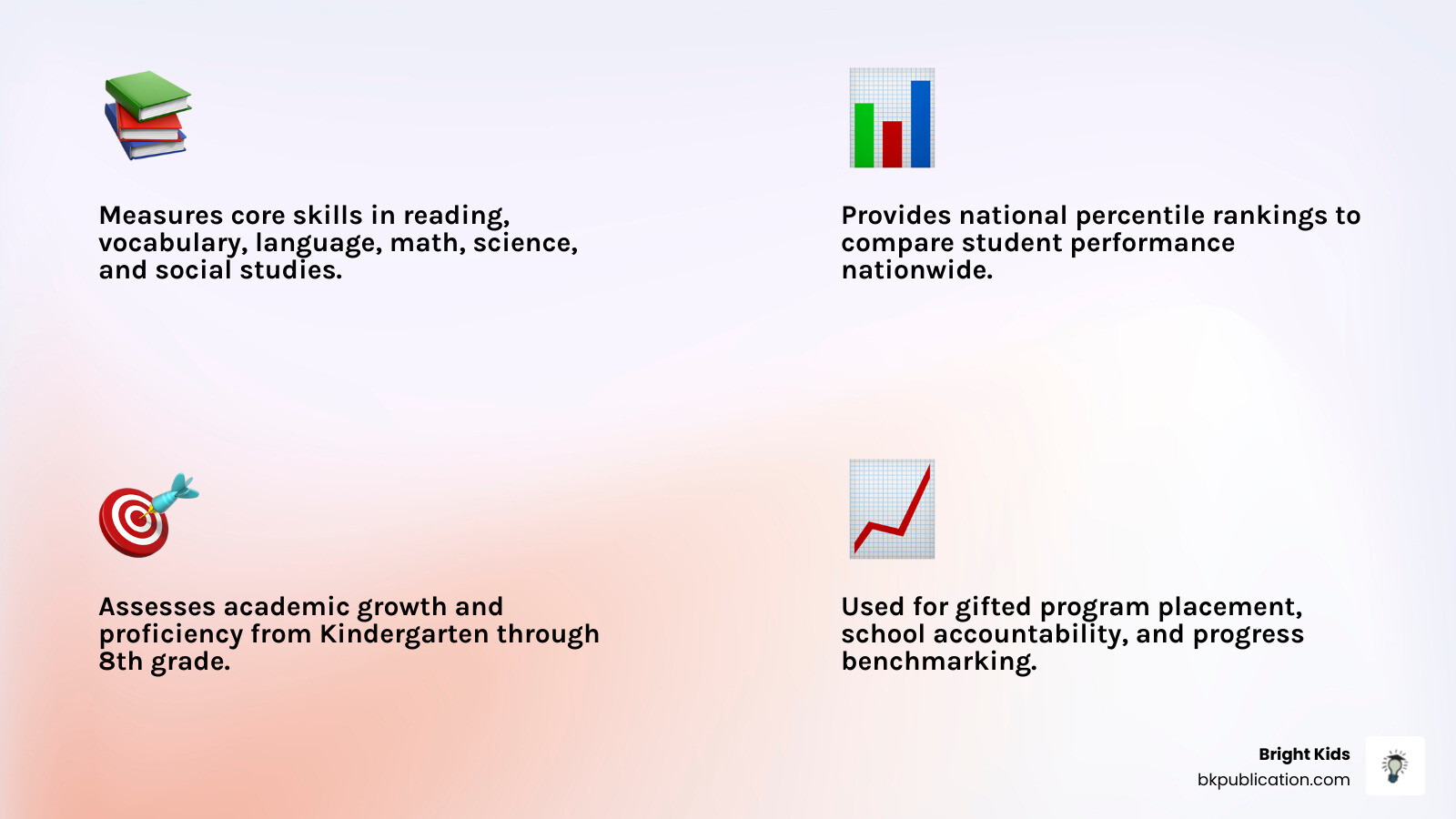
This ITBS Beginners Guide is your starting point for understanding the Iowa Test of Basic Skills — a standardized K–8 assessment used to measure your child's academic skills and compare their progress to students nationwide.
Here is a quick overview of what you need to know:
| Topic | Quick Answer |
|---|---|
| What is the ITBS? | A standardized test measuring core academic skills for grades K–8 |
| Who takes it? | Students in public and private schools across the US |
| What does it test? | Reading, vocabulary, math, language, science, and more |
| Why does it matter? | Used for gifted placement, school accountability, and academic benchmarking |
| How to prepare? | Targeted practice, skill-building, and full-length test simulations |
The ITBS is one of the most widely used academic assessments in the country. Yet many parents feel blindsided when their child is scheduled to take it. What exactly does it measure? How are scores used? And how can your child prepare without unnecessary stress?
Those are exactly the questions this guide answers.
I'm Bige Doruk, founder of Bright Kids, and over nearly two decades I've helped more than 10,000 students prepare for assessments just like the ITBS — making this ITBS Beginners Guide a natural extension of the work we do every day. In the sections ahead, I'll walk you through everything you need to feel confident and prepared.
What is the Iowa Test of Basic Skills (ITBS)?
The Iowa Test of Basic Skills, commonly known as the ITBS, is a battery of standardized tests developed by the University of Iowa. First introduced decades ago, it has become a gold standard in educational assessment. Unlike some exams that focus solely on whether a student can pass a specific grade, the ITBS is designed to measure academic growth and student proficiency across a wide spectrum of skills.
When your child sits down for the ITBS, they aren't just taking a "pass/fail" quiz. They are participating in a sophisticated evaluation that places their performance within national percentiles. This means you can see exactly how your child's math or reading skills stack up against other students in the same grade across the country. For those looking to get a head start, we recommend checking out an ITBS Online Practice Test to see the format firsthand.
Understanding the Role of ITBS in Education
We often view the ITBS as a multi-purpose tool in the educational shed. Its primary assessment goals are to provide longitudinal tracking—meaning teachers can look at a student’s scores from second grade through eighth grade to see the trajectory of their learning.
Beyond individual growth, many school districts in areas like New York, Chicago, and Houston use these scores for gifted and talented placement. High scores can open doors to advanced curricula and specialized programs. Furthermore, schools use the aggregated data for accountability, ensuring that their teaching methods are effectively reaching students compared to national standards.
We want to clarify right now: unless your child is complaining of a "stinging" sensation on the outside of their knee while running, you are in the right place for educational testing. Our "ITBS" involves pencils, logic, and reading passages, not physical therapy and ice packs!
Core Sections and "Symptoms" of the Exam
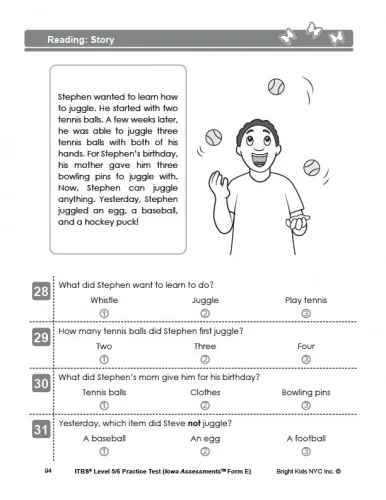
The ITBS is a "battery" of tests, meaning it is broken down into several subtests. Depending on the grade level, the exam typically covers:
- Vocabulary: Testing the meaning of words in context.
- Reading: Assessing comprehension through various passages.
- Language: Covering spelling, capitalization, punctuation, and usage.
- Mathematics: Divided into concepts, problem-solving, and computation.
- Social Studies: Evaluating knowledge of history, geography, and civics.
- Science: Testing scientific inquiry and content knowledge.
- Sources of Information: Assessing the ability to use maps, diagrams, and reference materials.
To help your child get comfortable with these specific sections, you can access a Practice ITBS Test Free Online to identify which subjects might need the most attention.
Identifying Student Risk Factors and Challenges
Even the brightest students can face "symptoms" of test-day struggle. In our 17 years of experience at Bright Kids, we’ve identified a few common risk factors that can lead to lower scores:
- Time Management: The ITBS is a timed exam. Students who haven't practiced working under a clock often leave questions blank.
- Test Anxiety: The pressure of a "national" exam can be daunting for a seven-year-old.
- Complex Word Problems: In the math section, the challenge is often reading the problem correctly rather than the actual calculation.
- Critical Thinking Gaps: The ITBS often asks students to infer meaning rather than just find a fact in a text.
Effective Preparation: An ITBS Beginners Guide to Success
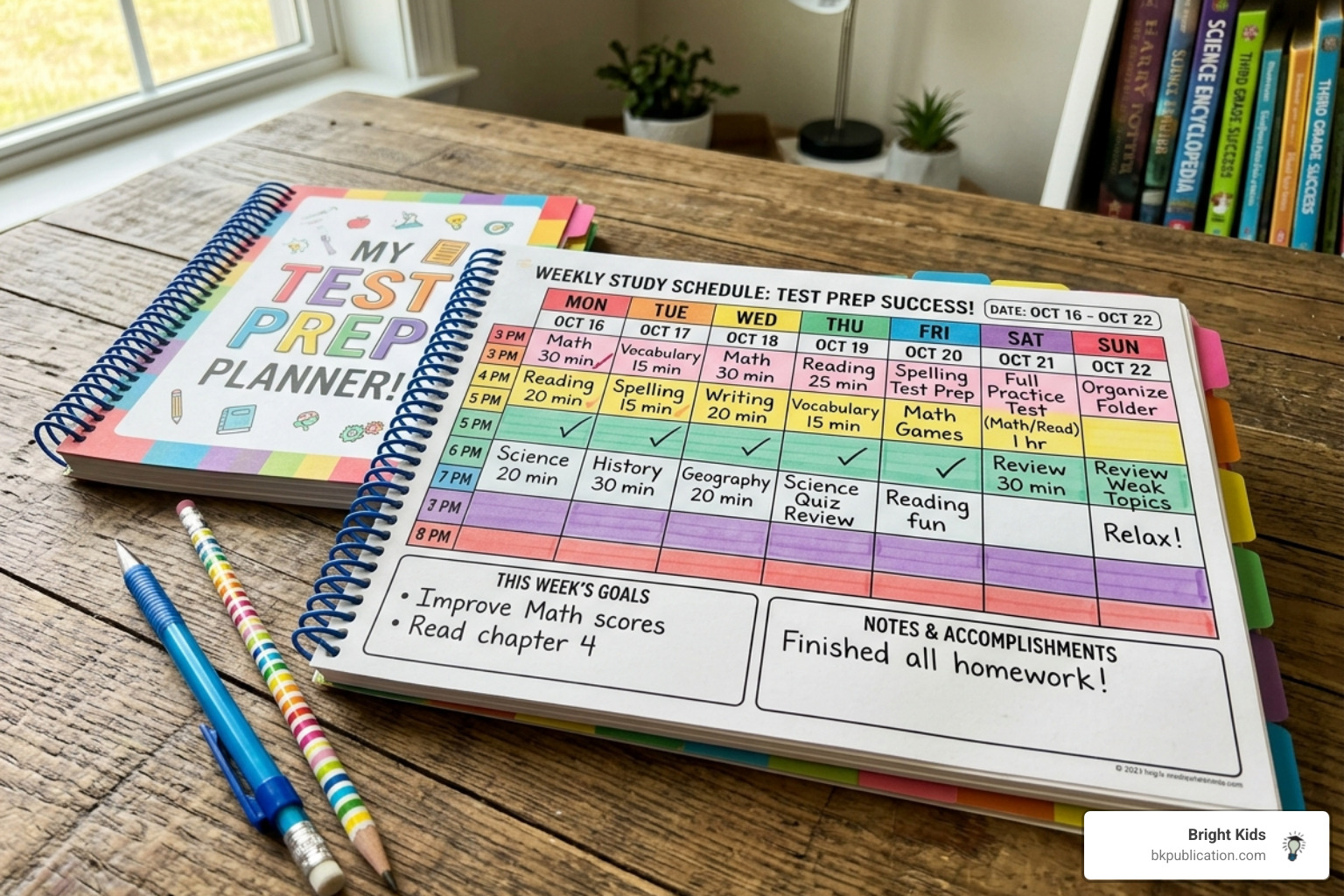
Preparing for the ITBS doesn't have to be a marathon. In fact, we believe in "working smarter, not harder." The key is consistent, high-quality practice that mimics the actual exam environment.
Essential Resources for an ITBS Beginners Guide
When looking for resources, quality matters. The market is flooded with generic workbooks, but for the ITBS, you need materials that reflect the specific cognitive demand of the University of Iowa's design. At Bright Kids, our methodology focuses on:
- Practice Manuals: Books that explain the "why" behind every answer.
- Online Simulations: Getting kids used to the digital or paper-and-pencil format they will face in school.
- Tutoring Support: Sometimes a professional can spot a "blind spot" in a student's logic that a parent might miss.
Step-by-Step ITBS Beginners Guide to Practice
If you are starting from scratch in April 2026, here is our recommended roadmap:
- Baseline Assessment: Have your child take a full-length practice test without any help. This isn't for a grade; it's to see where they stand.
- Targeted Review: Don't waste time on what they already know. If they are math whizzes but struggle with punctuation, shift the focus.
- Full-Length Simulations: About two weeks before the test, do a "dress rehearsal." No snacks, no TV, just the test and a timer.
- Error Analysis: Go over the wrong answers. Understanding why they picked "B" instead of "C" is the most important part of learning.
- Mental Stamina: Standardized tests are long. Build up their "sitting still" muscles gradually.
ITBS Levels by Grade Table
| Test Level | Typical Grade | Focus Area |
|---|---|---|
| Level 5-6 | K - Grade 1 | Listening, Word Analysis, Early Math |
| Level 7-8 | Grade 2 | Reading Comprehension, Math Concepts |
| Level 9-14 | Grades 3 - 8 | Advanced Science, Social Studies, Complex Language |
Interpreting Scores and Diagnostic Results
When the results come back, the "score report" can look like a different language. Here are the key terms you’ll see:
- Raw Score: Simply the number of questions your child got right.
- Grade Equivalent (GE): This is often misunderstood. If your 4th grader gets a GE of 6.2, it doesn't mean they belong in 6th grade; it means they performed as well as a 6th grader would have on that 4th-grade test.
- National Percentile Rank (NPR): This is the "big one." An NPR of 85 means your child scored higher than 85% of students in their grade nationwide.
- Stanines: A simplified 1–9 scale. 9 is very high, 5 is average, and 1 is low.
By identifying these strengths and addressing weaknesses early, you can adjust your child's educational path before they fall behind.
When to Seek Educational Support
We often tell parents that a single test score isn't a "destiny," but it is a data point. You should consider professional tutoring or educational consultation if:
- Your child’s scores are consistently lower than their classroom grades.
- There is a significant "dip" in one specific subject area.
- You are aiming for a highly competitive gifted and talented program in cities like San Francisco or Dallas.
- Your child experiences severe anxiety that prevents them from showing what they truly know.
Frequently Asked Questions about the ITBS
How long does it take to see improvement in ITBS scores?
While every child is different, we typically see meaningful improvement after 6 to 8 weeks of consistent, targeted practice. It’s about building the "test-taking muscle" alongside academic knowledge.
What are the most common mistakes students make on the ITBS?
The "silly mistake" is king. Students often misread "which of these is NOT" as "which of these IS." Another common error is "bubbling" the answer on the wrong line of the answer sheet.
Is the ITBS the same as the CogAT or ISEE?
No. The ITBS measures achievement (what you have learned). The CogAT measures ability (how you think/reason). The ISEE is specifically for private school admissions. However, many schools administer the ITBS and CogAT together to get a full picture of a student.
Conclusion
As we look toward the remainder of 2026, the importance of academic benchmarking has never been clearer. The ITBS serves as a vital compass, helping us navigate our children's educational journeys and ensuring they are prepared for the challenges of high school and beyond.
At Bright Kids, we are committed to taking the mystery out of standardized testing. Whether you are in New York, Miami, or Los Angeles, our goal is to provide you with the tools to turn test day into a day of triumph. If you're ready to take the next step, we invite you to Explore the full ITBS collection of prep materials.
The ITBS is just one chapter in your child's story. With the right preparation and a warm, supportive approach, they can walk into that classroom with their head held high, ready to show the world exactly what they’ve learned.